If you work in the rehabilitation field you will certainly have some reference publications that are the cornerstones of your profession.
As students, we are mentioned several times the surnames of authors who have provided valuable contributions to the scientific community through their researches. But most of the time it is assumed for the authors to be men, taking away from female researchers of merits they are due.
Women’s enterprise: the assessment of muscle strength
Florence Kendall
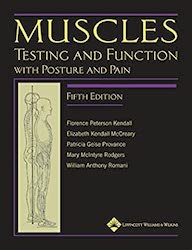
You surely know “Muscle Testing and Function with Posture and Pain”, by F. Kendall and E. Kendall McCreary. This is a book that all students and practitioners in medical and other allied health fields have on their shelf, detailing testing maneuvres of every muscle and body district.
Did you know that F. and E. stand for Florence and Elizabeth?
Florence Kendall is considered the “mother” of physical therapy. Together with her husband Henry, she spent many years treating polio patients in Baltimore. Since physical therapy was not a licensed specialty, they were fundamental for the institution of the profession.
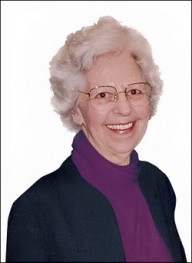
Fun fact: She served on President John F. Kennedy’s council on physical fitness, which established exercise standards for schoolchildren, and she was a consultant to the surgeon general of the Army helping designing exercise regimens for military training!
Florence and her daughter Elizabeth fine-tuned the testing of all body muscles, based on decades of clinical experience. Even when her husband retired from work, she kept teaching and leading lectures to young students.
Lucille Daniels and Catherine Worthingham
They were two physiotherapists who coauthored two of the most important books in rehabilitation: “Muscle Testing – Techniques of Manual Examination and Performance Testing” and “Therapeutic Exercise For Body Alignment And Function”.
Worthingham was the first physical therapist to hold a doctoral degree. These two women systematized and defined one the most shared method of evaluating muscle strength, against the rater´s resistance using a 0 to 5 scale.
Wilhelmine Wright
Finally, when speaking of muscle testing, another woman should be remembered.
The development of Manual Muscle Testing (MMT) was developed in response to the need to assess muscle strength losses during the polio outbreak in early part of the 20th century. The method is credited to Robert W. Lovett, an orthopedic surgeon, and Wilhelmine Wright, his assistant.
Miss Wright was a precursor of the physical therapist of today, since there were no educational programs in physical therapy in her time. Her method remains the mainstay of muscular assessment in the medical community, with little refinement and development by Kendall.
MerloBioEngineering celebrates women’s expertise by spreading their discoveries.
Check our latest post on Women and Balance here.
Written by M. Chiara Bò, PT – MerloBioEngineering