Cancer-related fatigue: a huge issue for cancer survivors
Cancer-related fatigue is a disabling chronic condition that cancer survivors could experience during and after recovery. It is a persistent and subjective sense of exhaustion, affecting their physical, emotional, and mental spheres, which is not proportional to the activity performed and cannot be alleviated by rest or sleep.
Among the interventions suggested by scientific literature, physical activity and exercise led to promising results when performed under the supervision of the professional.
The Chronic Care Model as a new approach to cancer
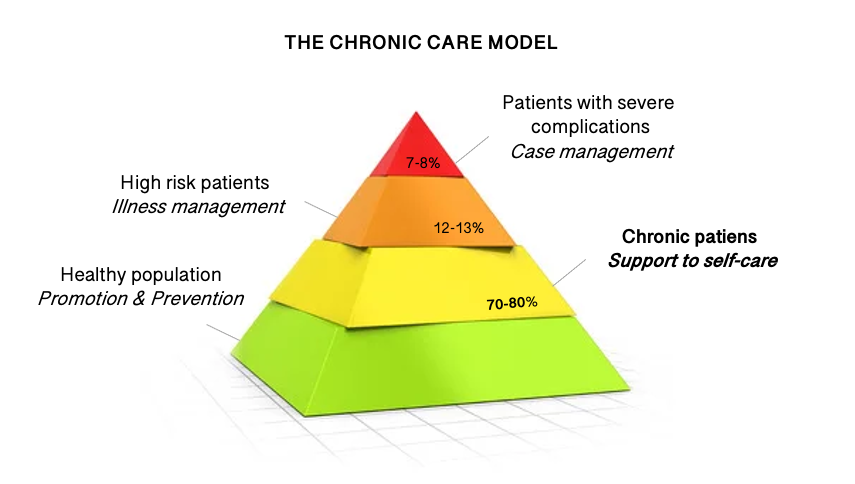
Given the increase in survival rates, cancer is now increasingly considered a chronic condition. This means that the number of cancer survivors suffering from cancer-related fatigue is expected to grow in the following years, with a risk of overloading the national health systems.
The Chronic Care Model enters in this scenario by suggesting a new way to address fatigue in cancer survivors. When it remains within established ranges and does not suddenly exacerbate, fatigue can in fact be considered a chronic symptom of these patients. For this reason, it is appropriate to support patients to continue rehabilitation through self-managed programs at home, rather than meeting patients in hospital settings.

Our contribution to the rehabilitation field: a new scoping review
The research team from the Rehabilitation Department of the Azienda USL-IRCSS di Reggio Emilia (IT) recently published a scoping review on the self-managed physical activity and rehabilitation for cancer-related fatigue in cancer survivors. The aim of scoping review is in fact to map the available evidence on a broad-ranging topic and clarify any gaps, not to establish the efficacy of an intervention.
We highlighted which are the most employed types of physical activity, the frequencies and duration of the interventions, the strategies used to support self-care within daily routine, and the efficacy as reported by authors.
We strongly believe that self-care cannot be started all of a sudden, but should be integrated in a gradual program, in order to educate patients of its importance and help them cope with their symptom and management.
This scoping review provides insights for both professionals working with cancer survivors and researchers designing new clinical studies. We highlighted the strengths of the existing literature and the topics to be further addressed and explored.
The full text can be found here.
We have published another scoping review about self-managed physical activity performed by breast cancer survivors. Stay tuned for the updates in the post section!