Cerebral palsy and equinovalgus foot
Children with cerebral palsy often develop musculoskeletal deformities, including the equinovalgus foot. The equinovalgus deformity is attributed to muscle shortening, increased tone, overactivity, and co-contraction of plantar flexor muscles, along with weakness or inhibition of dorsiflexor muscles.
The Peroneus Longus is responsible for both plantarflexion and valgus deviation of the foot. If peroneus longus is overactive and, simultaneously, its antagonist, the Tibialis Anterior, is weak, this may lead to equinovalgus gait.

Newly published article
We are proud to share a recently published article by our French colleagues from the Timone Children’s Hospital of Marseille.
You can read the open-access full text here.
Dr. Boulay and his Colleagues hypothesized that injecting Botulinum NeuroToxin type-A (BoNT-A) into the Peroneus Longus would have improved gait and prevented the development of further deformities, in hemiplegic children with equinovalgus deviation.
Results after BoNT-A injection
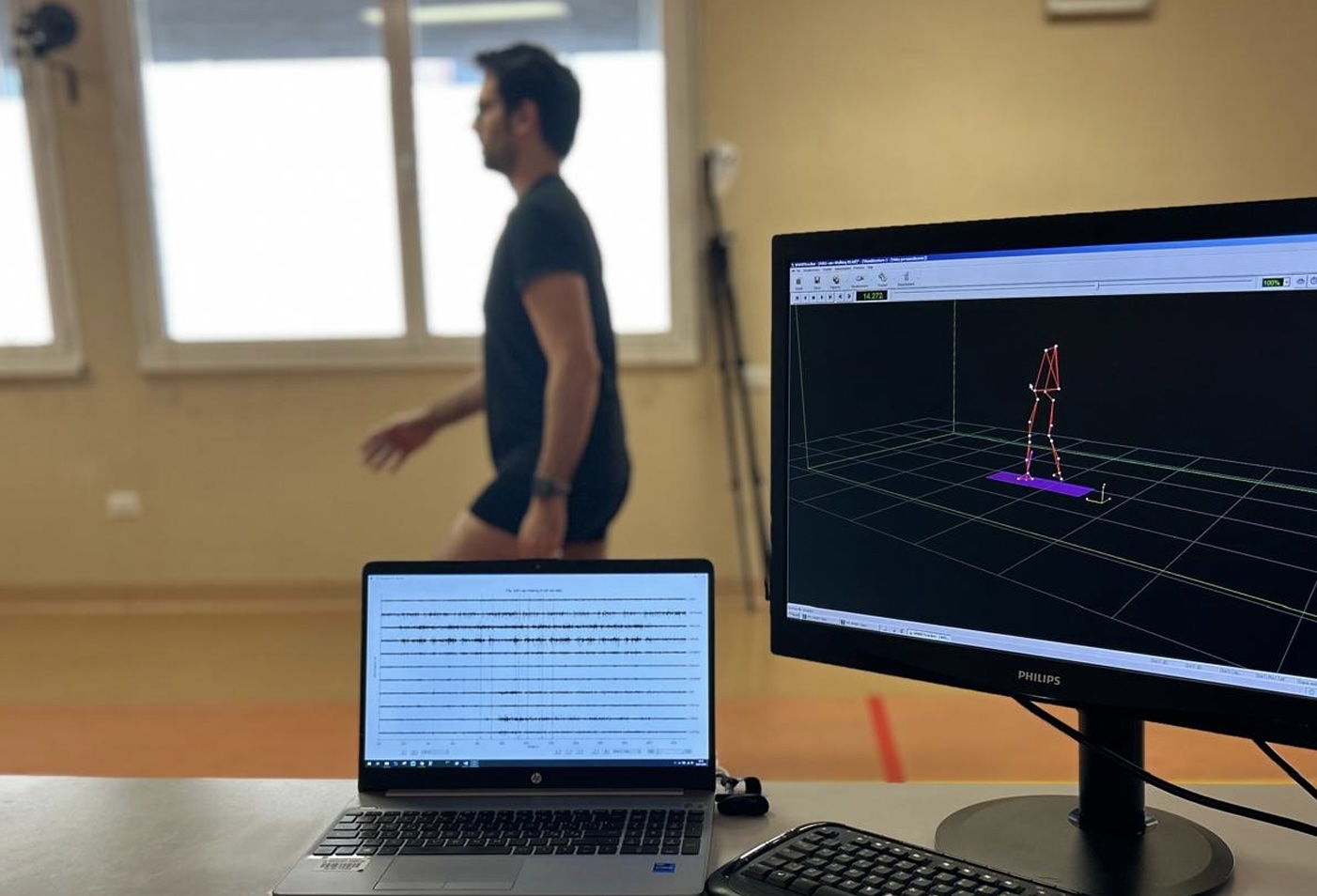
After BoNT-A injection and 4-month physiotherapy, radiologic imaging, clinical examination, and gait analysis with dynamic electromyography were performed.
Radiological measurements showed a reduction in foot deformity. We also found a significant improvement in the gait pattern (effect size = 0.83!), particularly regarding heel lift, foot clearance, and ankle dorsiflexion.
Normalized gait speed increased by 0.1 (nondimensional). Moreover, EMG showed increased activity for Tibialis Anterior and Gastrocnemius but not for the Peroneus Longus (see the Figure generated by our EmgEasyReport software). This may be due to improved selective motor control between the dorsiflexor and plantar flexor muscles. Moreover, injecting the Peroneus might prevent the weakening of the Triceps Surae, leading to a better agonist-antagonist balance between Tibialis and Gastro-soleus complex.
Congratulations to all Authors!
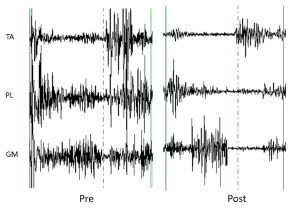
Image generated with EmgEasyReport by MerloBioEngineering. Reproduced with the permission of Dr. Boulay and colleagues from Boulay et al. 2023 on Pediatric Neurology.
At MerloBioEngineering, we constantly seek new collaborations to increase our knowledge with precious and positive debates with other expert Colleagues and to support their research activities.
Consult the news section for the latest papers and partnerships.