The reach-to-grasp gesture
How do we recognize cooperative and competitive intentions when we observe a reaching movement?
In collaboration with the Motion Analysis Laboratory of Correggio (Azienda USL – IRCCS of Reggio Emilia) and the Department of Psychology of the University of Modena and Reggio Emilia(Prof. Iani, Prof Rubichi, Dott. Ciardo), we investigated the kinematics of reaching.
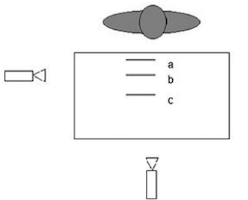
Subjects were required to reach-and-grasp a target on a table “as if they were going to steal it from a competitive individual in front of them”, “as if they were going to offer it to a facing hypothetical individual” or “as if they were just going to grasp it”. It was investigated whether a frontal or lateral observation of the grasping could modify the understanding of the intention with which the task was performed.
When instruments and humans disagree
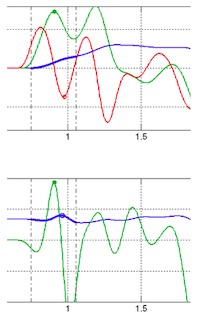
MBE provided for signal processing and paper writing (e.g. methods, results). The kinematic analysis showed that non-social and social–competitive/cooperative intentions had different movement patterns, for 9 parameters taken into account.
However, when the researchers asked volunteers to observe the action from both perspectives, the subjects’ discriminative ability was reduced, particularly when the reach-to-grasp was observed from the frontal view, for reasons that have yet to be investigated.
An integration of disciplines
This is an example of how motion analysis, especially using specific software, can be useful in multidisciplinary research projects, integrating bioengineering into different fields of application.
The study paved the way for new investigations into the role of eye contact in the interpretation of task intentions.
The full text can be viewed at the link.