
ESMAC 2025: our contributions continue!
Our involvement in the 2025 ESMAC – European Society for Movement Analysis in Adults and Children Congress is far from over!
We’ve already shared updates about a collaboration with the MARLab at the Bambino Gesù Pediatric Hospital in Rome (read here) and a series of projects with the Movement Analysis Laboratory (LAM) at AUSL-IRCCS Reggio Emilia (read here).
Gait analysis meets machine learning
This time, we highlight our collaborations with the University of Bologna – Department of Electric, Electronic, and Information Engineering and the LAMB at Sol et Salus Hospital in Rimini.
MerloBioEngineering supported two projects presented by Eng. Farshad Samadi Kohnehshahri, a brilliant PhD candidate specializing in artificial intelligence and machine learning for movement science.
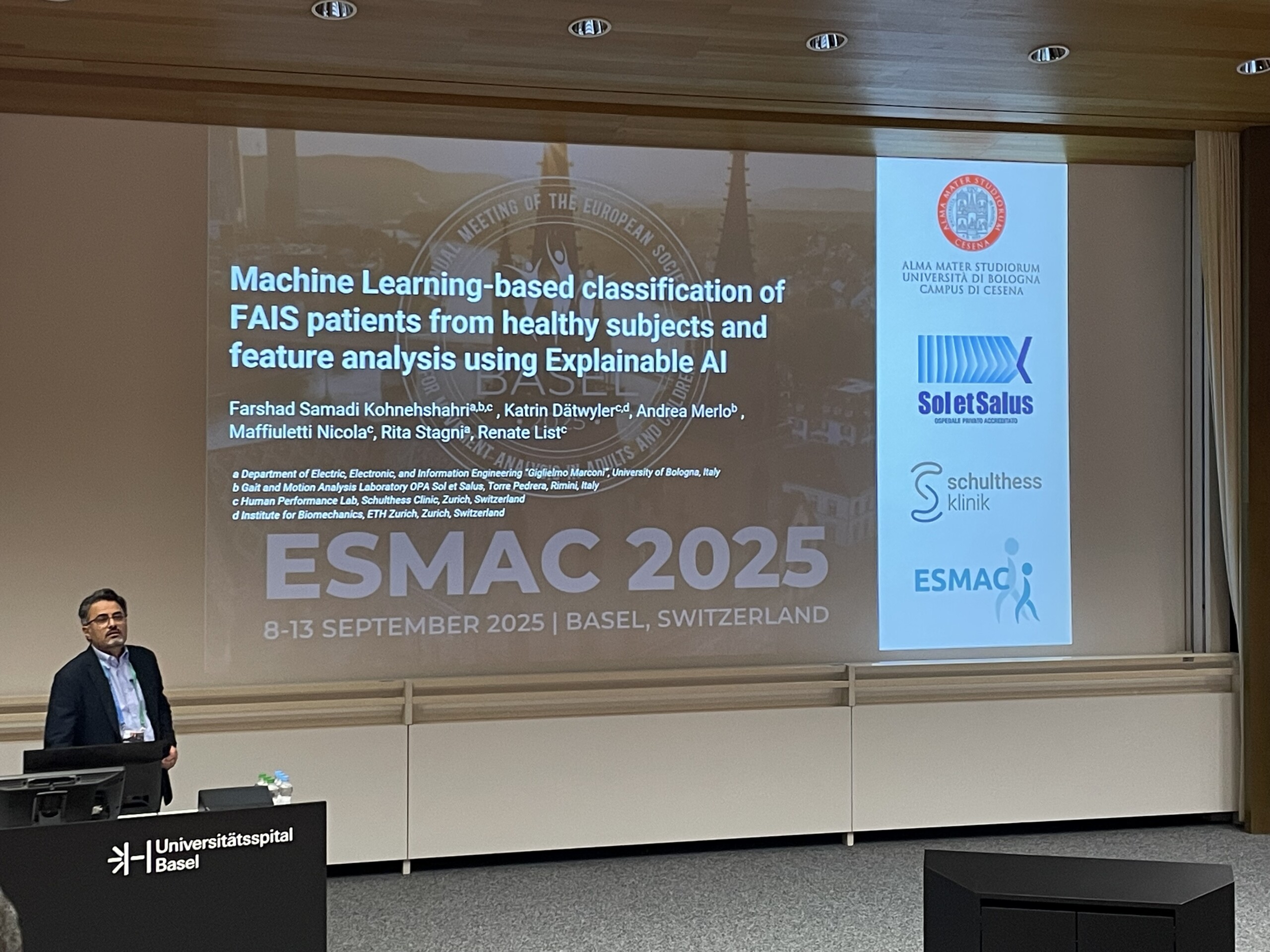
Classifying patients with FAIS
This oral presentation was carried out in collaboration with the Human Performance Lab of the Schulthess Clinic in Zurich (Switzerland).
FAIS (femoroacetabular impingement syndrome) often results in hip pain and limited joint function. However, its early detection and distinction from healthy individuals remains a clinical challenge.
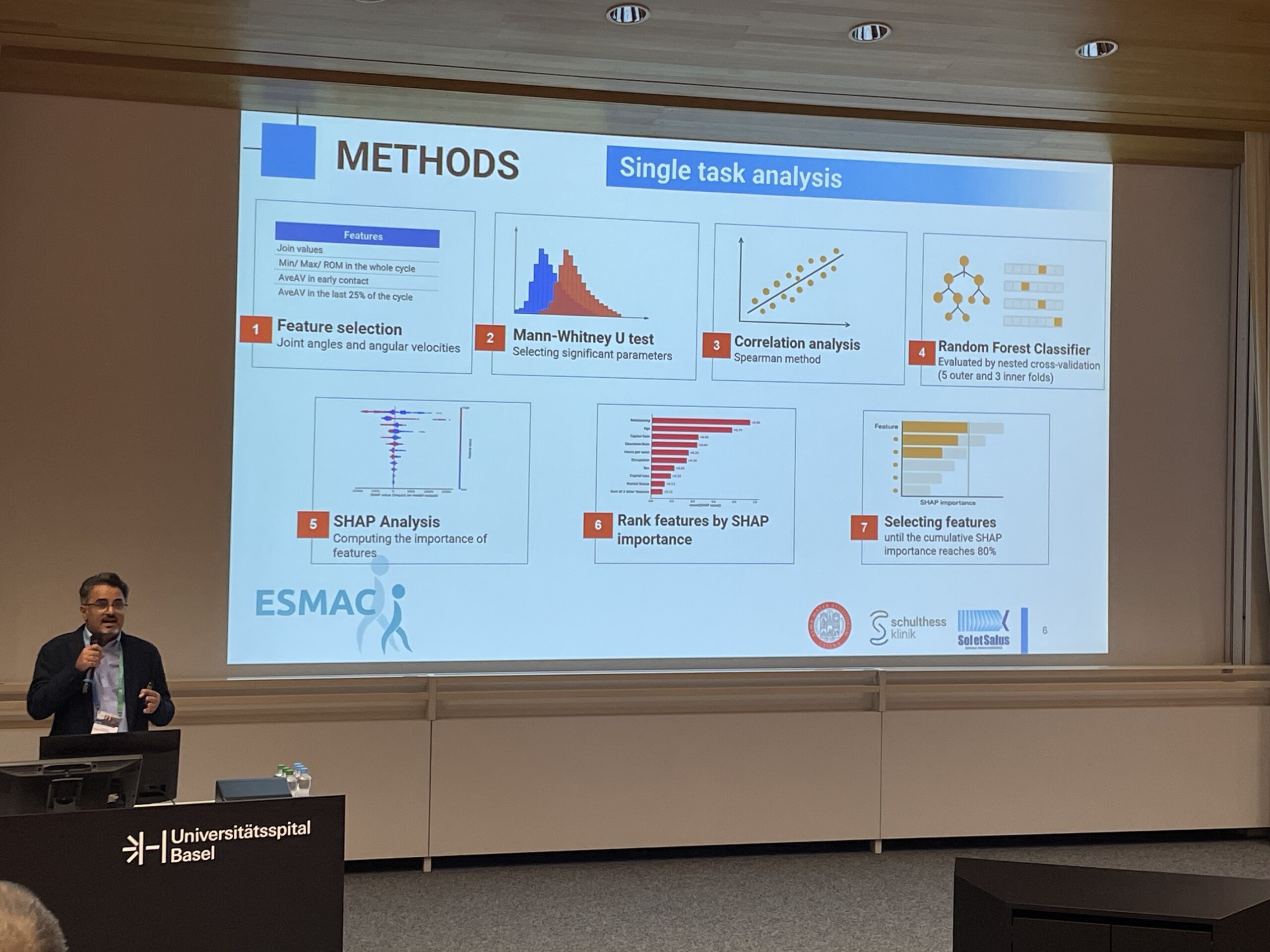
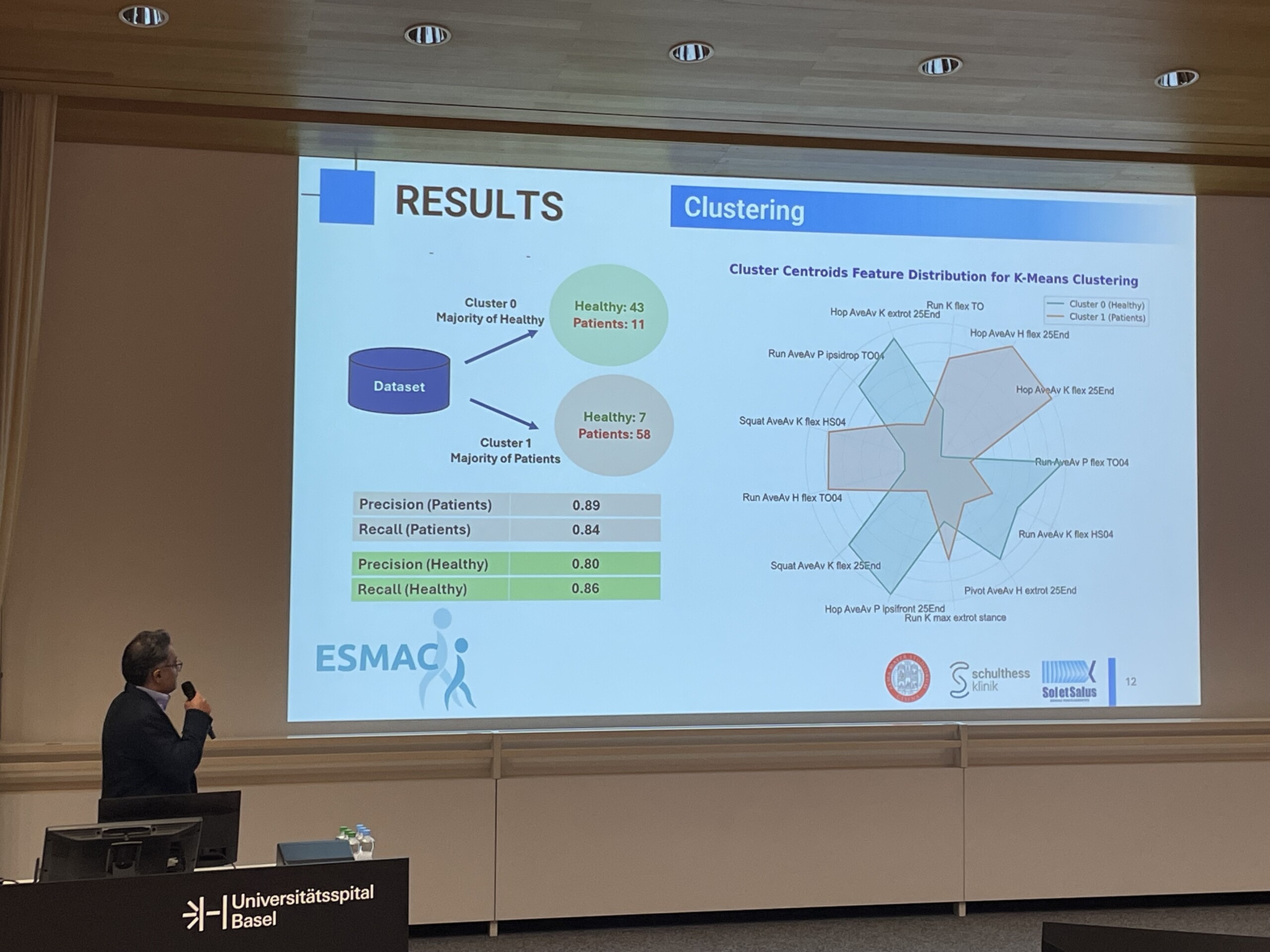
By applying machine learning and explainable AI techniques, we aimed to classify patients with FAIS. The study included 69 FAIS patients and 50 healthy subjects, performing dynamic tasks such as walking, stepping, pivoting, squatting, and running. Random Forest classifiers and SHAP analysis revealed that angular velocity metrics were key features in patient classification.
Clustering stroke patients
The second project, presented in a poster session, explored how to determine the optimal number of clusters in a population of stroke patients.
The team applied fuzzy c-means clustering along with validity functions to identify clinically meaningful movement patterns. The proposed validity function increased the robustness of determining the best number of clusters in the dataset.
Proud to contribute to advancing movement science
In total, MerloBioEngineering supported four presentations at ESMAC 2025, in collaboration with five leading institutions: two public hospitals, two private clinics, and one university. We are honored to contribute our software and research expertise to projects that enhance clinical practice and improve patient care.
Stay tuned for more updates from the field of movement analysis!