
Why using gait summary indices?
The scientific literature is teeming with studies on gait summary indices in patients with neurological disorders, since they exhibit pathological patterns during gait, due to a combination of central and peripheral alterations.
While being considered the gold standard when designing a rehabilitation plan, a comprehensive clinical and instrumental assessment may be too expensive and time-consuming to be performed repeatedly on each patient. For these reasons, indices based on ground reaction forces (GRF) have been suggested to summarize the overall ability to walk as alternative measures to gait analysis to be used during the rehabilitation period. These are simple and quick to be collected, do not require patient long preparations, and can be obtained while being dressed and with the usual orthosis.
New study on GRF-based indices
The team working at the Gait and Motion Analysis Laboratory of the Sol et Salus Hospital has recently published an article on the usefulness of two indices in assessing the walking ability of stroke patients with equino-varus foot deformity.
Dynamic loading ability (DLA) refers to the weight-bearing ability over the stance foot during walking.
Dynamic propulsive ability (DPA) refers to the ability to generate propulsion from the stance foot during gait.
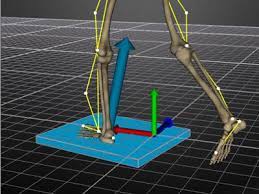
In patients with neurological impairments, lower limb muscle shortening, the increase of soft tissue stiffness, and the onset of overactivity affect foot correct placement, weight-bearing ability, and the possibility be stretched during stance. This results in a reduced propulsive ability, which is essential to walking efficiency and speed.
Data were collected from stroke patients whose gait was assessed with several clinical scales. DLA and DPA were consistently found to correlate with all clinical variables and an increase in walking velocity showed a strong correlation with both the GRF-based indices.
Full text is available here.
Clinical implications
The added value of DLA and DPA relies on the ease and speed of use, even in patients with bulky orthoses or walking aids. Normative values are available. Indices can be employed during the rehabilitation period to test whether the increase in walking speed is due to a real recovery of the propulsion phase or the onset of compensatory mechanisms. This may be of relevance when supervising the treatment efficacy since data can be repeatedly collected with paltry costs.
MerloBioEngineering is fully committed to identifying new technologies that improve daily clinical practice and make the work of practitioners easy and effortless.
If you need any consultation, you can write us through the specific web page.