
Involuntary muscle activity in neurological patients
The onset of muscle overactivity is one of the consequences of upper motor neuron lesions due to strokes or traumatic brain injuries. It can arise the first few days after the acute event. It should be identified as early as possible, as it may contribute to soft tissue reorganization and chronic phenomena related to exaggerated stretch reflex.
Surface EMG (sEMG) is the gold standard to identify and measure the presence of muscle activity. The presence of involuntary muscle activity in acute patients had been assessed in our previous works, with very short or long-lasting acquisitions.
New algorithm developed
At MerloBioEngineering we developed a new algorithm for easy and fast EMG signal processing. Six-hour lasting acquisitions were collected from the biceps brachii of stroke or traumatic brain injury patients hospitalized in acute settings.
A wearable probe recorded sEMG data and upper limb acceleration consequent to active or passive movements, if any. The equipment did not prevent the daily activities and routines of the ward (e.g., nursing, hygiene).
The algorithm discarded unreliable epochs based on a set of data quality controls. Then, motor unit action potentials were detected among the acquisitions, quantifying the amount and duration of involuntary muscle activity at rest, i.e. with no arm movement as detected by the accelerometer.
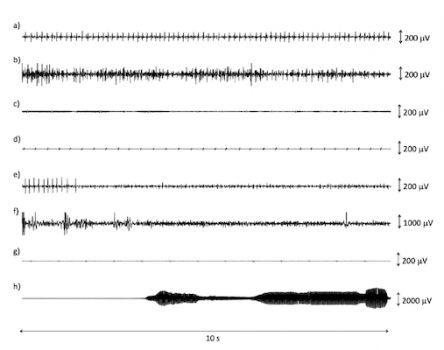
From Merlo et al. 2023, with permission
Validation of the algorithm
Two experts in neurorehabilitation (Andrea Merlo and Isabella Campanini), who visually inspected all epochs, performed the blinded control to assess the sensitivity and specificity of the new algorithm.
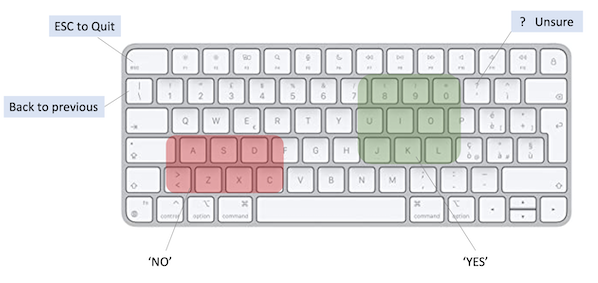
Additional custom software was implemented by MerloBioEngineering, maximizing the ergonomics of the assessment and lessening the assessors’ workload. A quick use of the keyboard allowed us to rapidly classify the epochs, saving all the decisions and comparing them with those made by the algorithm.

New paper published
We recently published a new paper presenting the results.
The sensitivity of the new algorithm was 85.6% (83.6 – 87.4%) and the specificity was 89.7% (88.6 – 90.7%). The overall accuracy of the algorithm in detecting involuntary muscle activity in acute patients was 88.5% (87.6 – 89.4%).
The results support using this new algorithm for in-field detection of involuntary muscle activity with wearable sensors. The availability of information on muscle activity characteristics may be used to assess its predictive ability for the development of muscle overactivity and joint deformities. This could have a remarkable clinical impact on an early start of rehabilitation treatments, preventing secondary complications from the very first days of hospitalization.
This is an excellent example of how bioengineering can support research, making clinicians’ work easier!
You can always contact us if you want to learn more or need support for a research project.