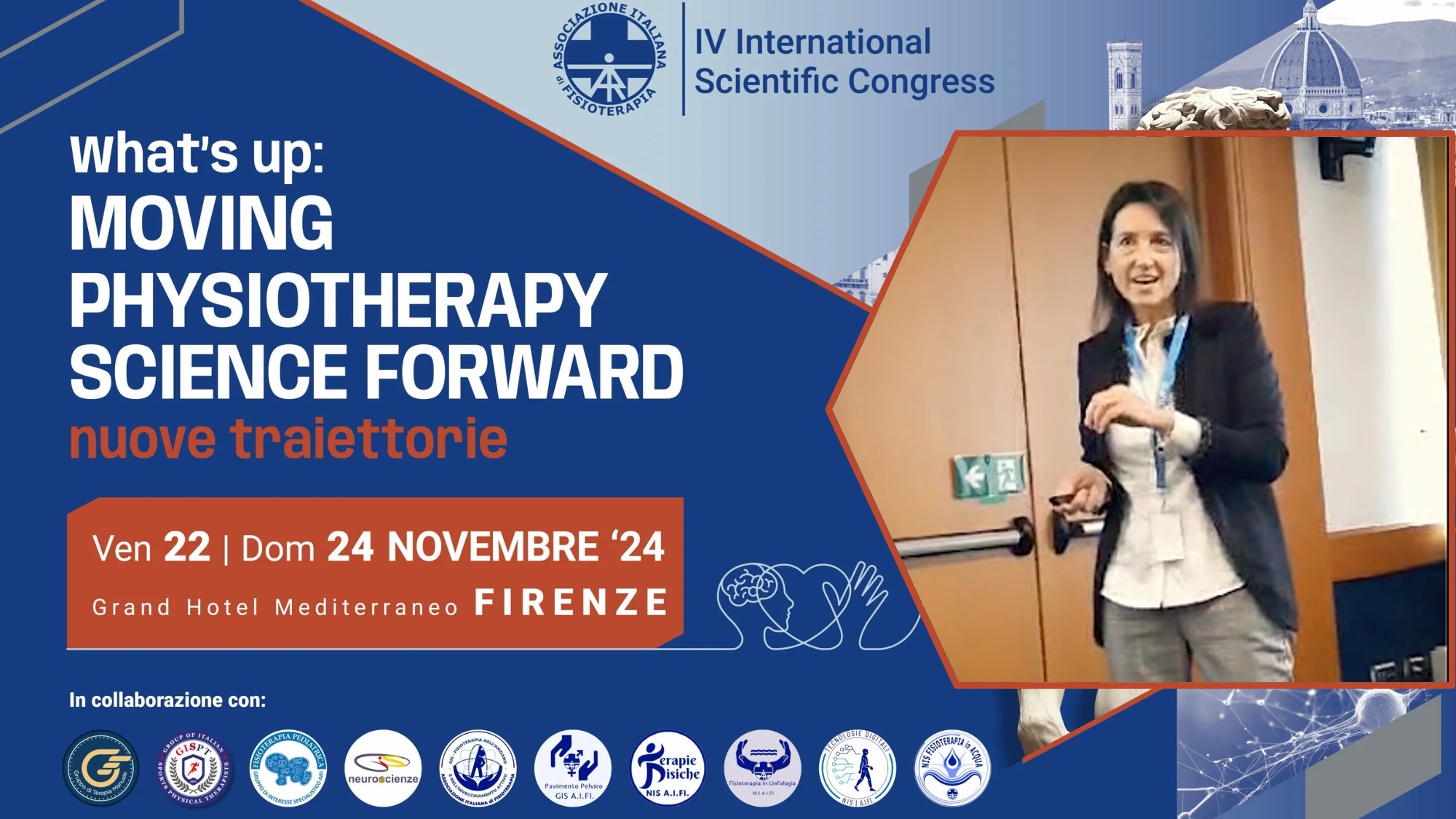
The 4th International Congress of AIFI – Italian Physiotherapy Association, entitled “What’s up: Moving Physiotherapy Science Forward. New Trajectories,” with the aim of analyzing the approach to the complexity of physiotherapy for patient care was held in Florence, 22nd-24th november 2024.
The MerloBioEngineering team presented numerous research works through oral and poster presentations.
Inclusive Care: a new family-centered paradigm for hospitalized children
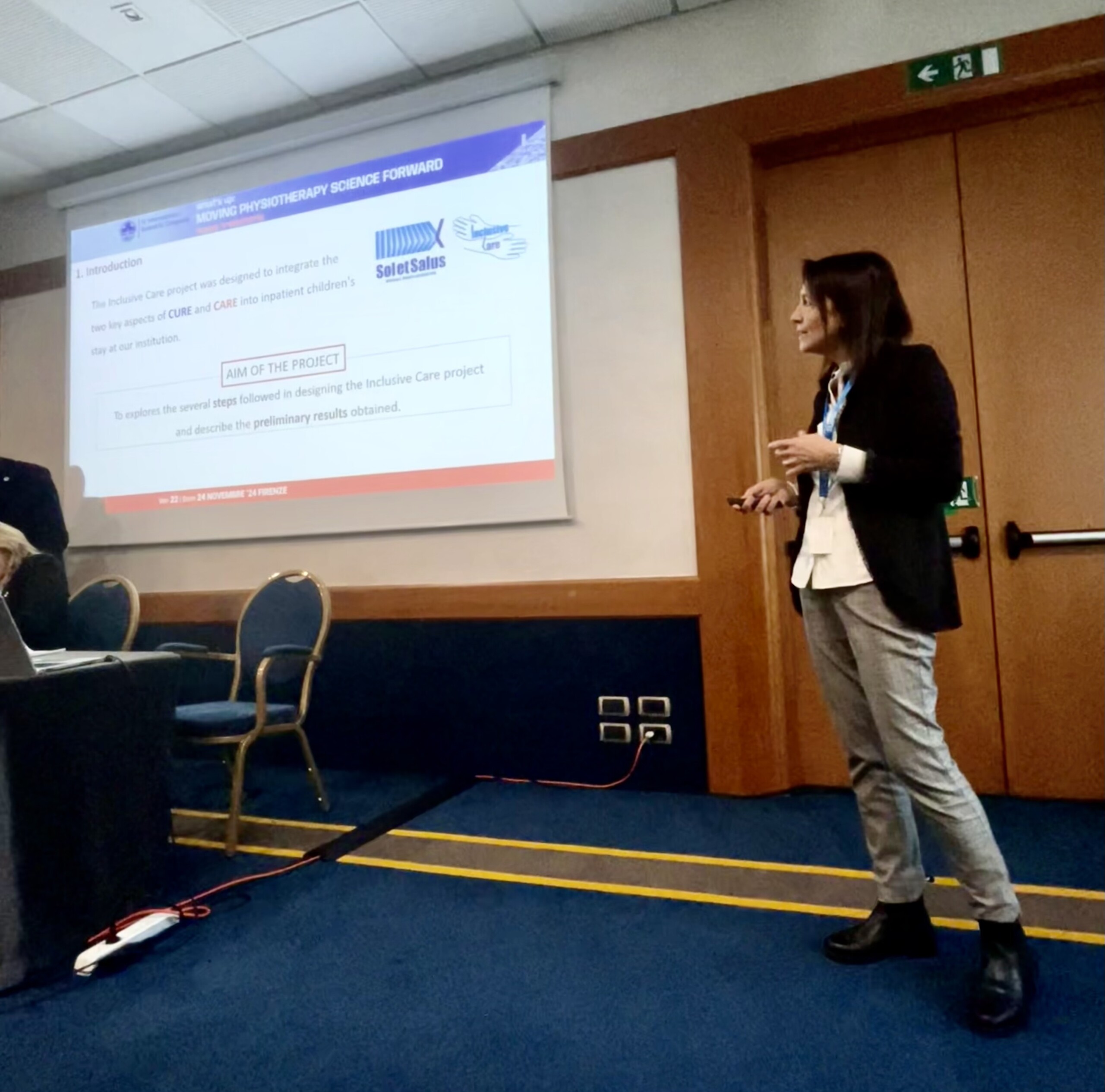
Dr. Meris Giacobbi, the physiotherapists’ coordinator of the Sol et Salus Hospital, presented the work entitled “Integrating the concepts of care and cure to improve the well-being of children with neurological disorders hospitalized after neuro-orthopedic surgery: the Inclusive Care project”.
More than 300 participants of the Congress listened to this ambitious project, which has already involved more than 200 children hospitalized after surgery. Inclusive Care is a new family- and patient-centered model of care created to improve children’s hospital stay through playful and educational group activities. The design steps were explained, including organization, settings, and research aims. The MBE team primarily provided expertise in the latter area through literature analysis, identification of outcome measures, and ongoing planning of scientific studies for publication.
Holter-EMG: early monitoring of muscle activity after stroke
Dr. Sara Scaltriti, from the Movement Analysis Laboratory of the Azienda USL-IRCCS of Reggio Emilia, presented the poster entitled “Monitoring the onset of involuntary muscle activity and development of spasticity after ischemic stroke over six months: case study.” A patient with a stroke was monitored with long-lasting electromyography (EMG) on the biceps brachii from as early as a few hours from the acute event to six months later.
We showed that EMG can highlight involuntary muscle activity before clinical manifestation, anticipating clinical diagnosis. This can pave the way for future research on early monitoring and treatments for patients with stroke.
Spasticity and ambulatory skills: are they always correlated?
Finally, Dr. Chiara Bò, from the MerloBioEngineering team, presented the poster entitled “Relationships between ankle measurements at the bedside and walking measurements in patients with chronic stroke outcomes. A correlation study”. The study investigated the relationships between measures usually acquired at the bedside, such as range of motion and spasticity, and functional ability measures, quantified by tests and questionnaires. It was shown that spasticity observed at the bedside with passive maneuvers of the therapist does not necessarily correspond to walking limitations, especially in patients with chronic stroke who walk at very slow speeds.
The discussion arising from the AIFI Congress has undoubtedly enriched our experience with suggestions and improving proposals and will enable us to implement our research consulting service further.
If you want to conduct a study and need support, please contact us at the dedicated page.