
The vicious cycle of overactivity
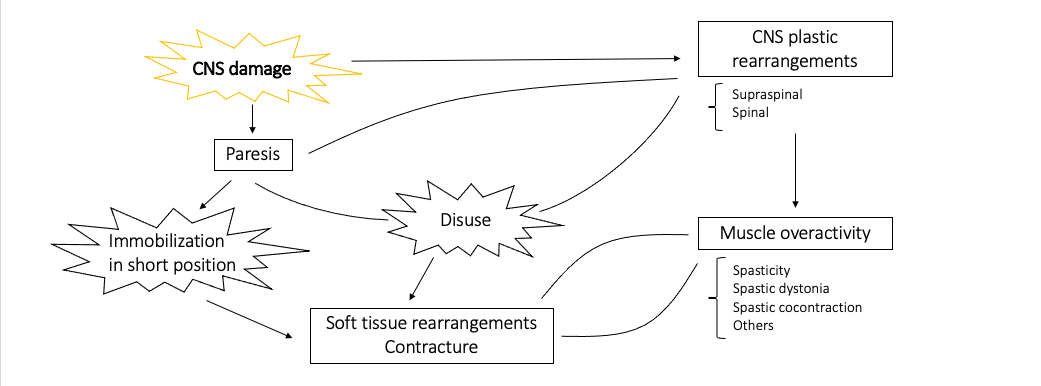
In patients with upper motor neuron lesions, the onset of muscle overactivity is quite common. This follows the vicious cycle described, among others, by Prof JM Gracies
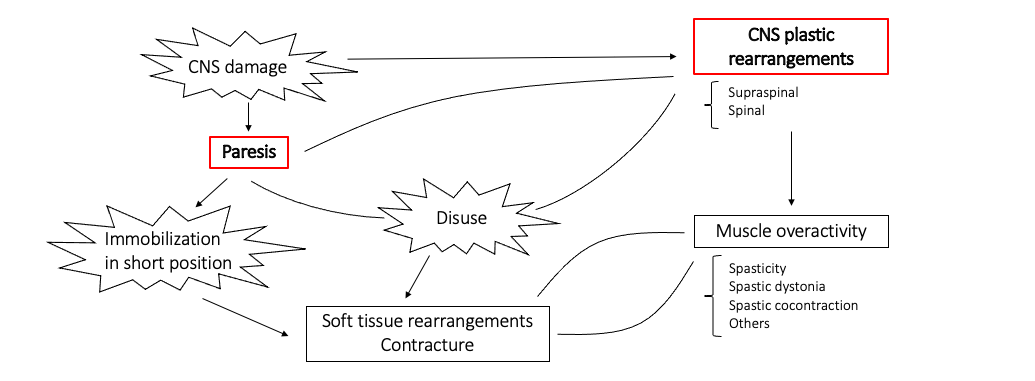
- The paresis consequent to central injury leads to muscle weakness;
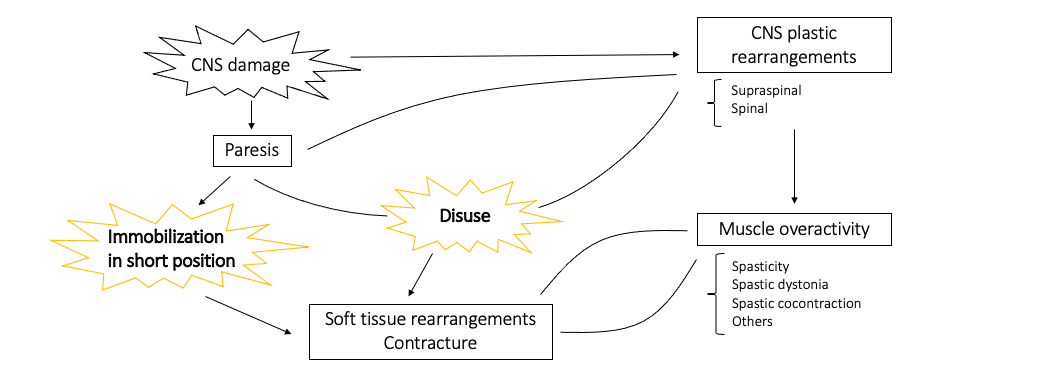
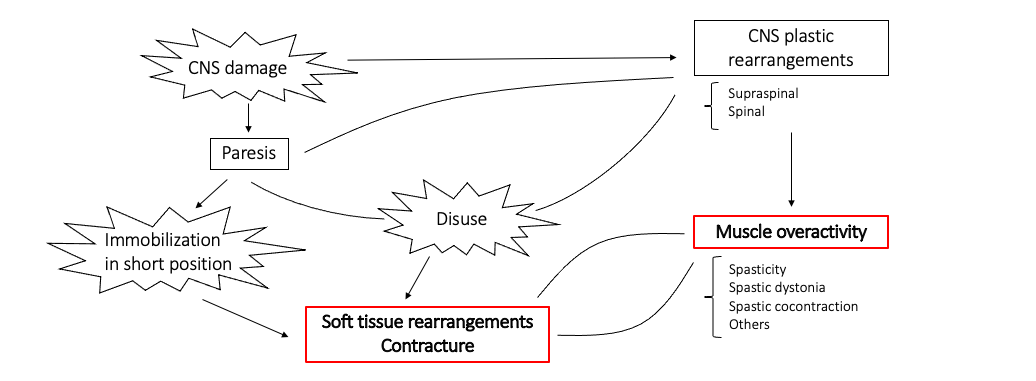
- Limbs are kept in shortened positions and develop soft tissue modifications, such as muscle contracture, increased stiffness and viscosity.
- Changes in peripheral structures cause increased neuromuscular spindle tension, leading to hyperexcitability of the stretch reflex.
- After CNS damage, several types of muscle overactivity develop, contributing to generate an altered motion response.
- After descendant fascicles damage, motoneurons loose their ability to un-recruit muscle fibers
Reduced extensibility of the muscle contributes to increase to the establishment of the vicious cycle. The research team at the Sol et Salus Hospital (IT), a reference center in Italy for functional surgery (a.k.a. neuro-orthopaedic surgery) has published a scientific study on the effect on spasticity of surgical muscle lengthening of the quadriceps femoris (QF).
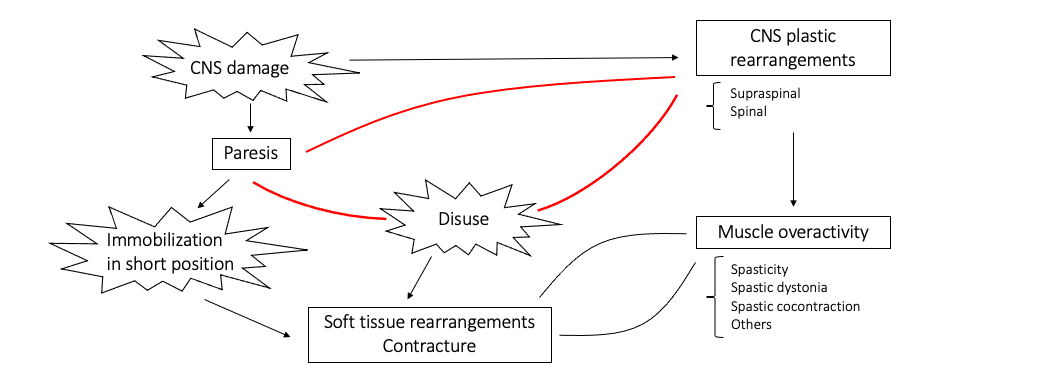
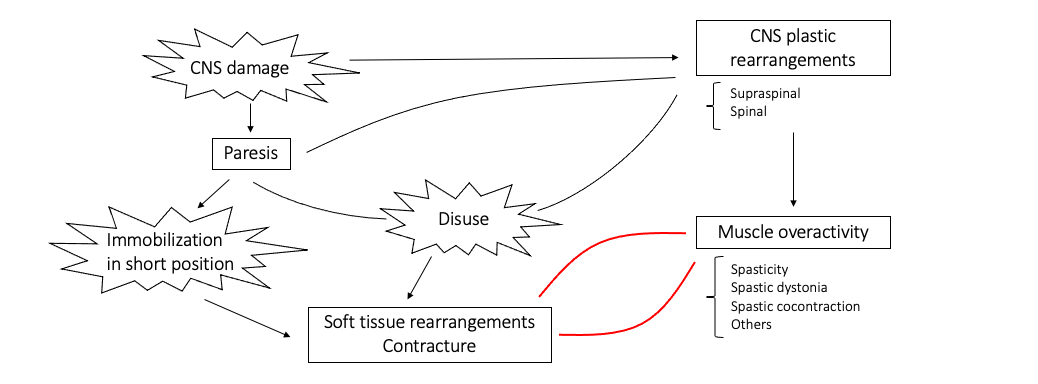
Adapted from Gracies 2005

Quadriceps aponeurectomy reduced spasticity in half of the sample at the one-month mark
We analyzed data from a sample of 93 chronic stroke patients who underwent functional surgery to restore their walking ability. Spasticity was assessed with the Modified Tardieu Scale, both before and one month after surgery. CASEs (N=57) underwent corrective surgery for both the foot and knee deviations, inclusive of a QF aponeurectomy. Controls (CTRLs, N=36) underwent corrective surgery for foot deviations only.
One month after surgery, QF spasticity significantly decreased in half of the cases – sometimes even disappearing – but it did not vary in the control group. You can read the full-text here.
From the manuscript: “Conclusions: Functional surgery inclusive of QF aponeurectomy can be effective in reducing or suppressing spasticity in chronic stroke patients. This is possibly a result of the reduction in neuromuscular spindle activation due to a decrease in muscle shortening, passive tension, and stiffness.”
Know to improve
This study may pave the way for new researches to be conducted to better understand the underlying mechanisms of muscle overactivity in neurological patients. Quadriceps aponeurectomy is a simple and minimally-invasive procedure, not requiring high specializations, that may represent a new strategy to reduce muscle spasticity in some chronic patients.
Our work is based on decades of experience in the field and on the desire to develop a thorough understanding of the overactivity phenomenon, in order to increasingly improve treatments provided to patients. At the Sol et Salus Hospital, we usually use MerloBioEngineering software and services to quickly and easily analyze patients’ data from large cohorts of subjects with research aims, till the publication of research studies.
If you are interested in knowing what our software can help you with, have a look on the site section or contact us.